- hello@daggloballtd.com
- No. 3 Ebong Close Wealth avenue, Palmsbay estate Abijo G.R.A. Lekki Epe exrpress way, Lagos State, Nigeria

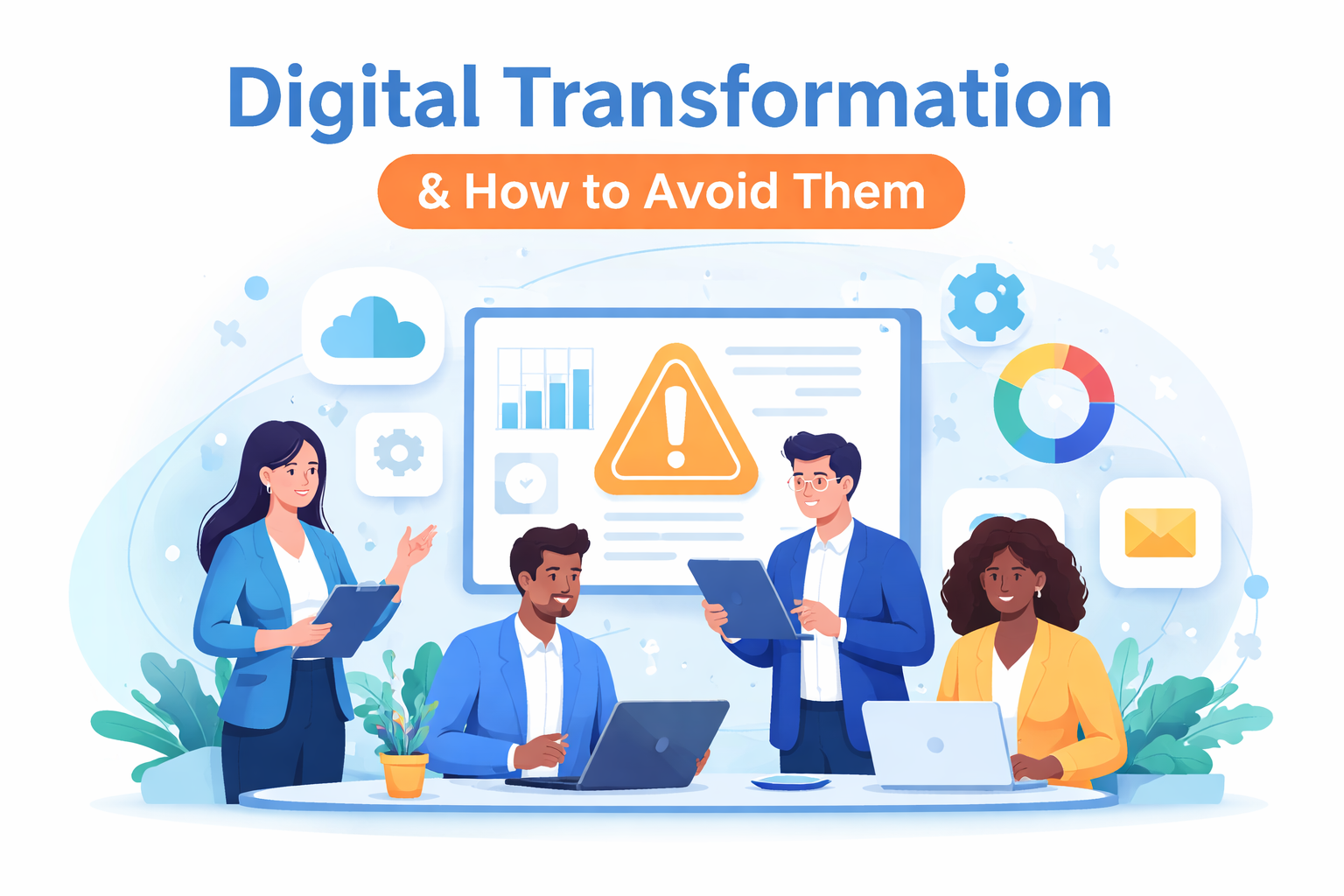
Digital Transformation Mistakes Businesses Make (and How to Avoid Them)
10
Mar
Digital transformation is no longer optional it's a critical business strategy. From improving operations to delighting customers, the opportunities are immense. But Many companies stumble along the way. Unsure if your business is ready? Discover 7 Signs Your Business Needs Digital Transformation and see if it’s time to start your journey
In this guide, you’ll discover the most common digital transformation pitfalls and actionable steps to overcome them, ensuring your journey is smooth, efficient, and successful.
1. Lack of Clear Vision and Strategy
Businesses often dive into digital transformation without a roadmap, leading to scattered efforts.
Why it’s a mistake: Teams lack direction, budgets are wasted, and projects stall.
Solution:
-
Define KPIs and long-term objectives.
-
Create a step-by-step digital transformation roadmap.
-
Align every initiative with your overall business goals.
2. Ignoring Company Culture and Employee Buy-In
Transformation is human-centric. Ignoring employees’ role can derail even the best technology initiatives.
Why it’s a mistake: Resistance slows adoption and lowers morale.
Solution:
-
Communicate benefits clearly.
-
Involve employees early in decision-making.
-
Reward engagement and celebrate small wins.
3. Focusing Only on Technology, Not Business Goals
Technology is a means, not the end. Investing without purpose leads to wasted resources.
Solution:
-
Select tech tools that directly support business objectives.
-
Measure every tool’s ROI through productivity, cost savings, or customer impact.
4. Underestimating Data Management Challenges
Data is the backbone of transformation. Poor handling can create major problems.
Solution:
-
Implement strong data governance and analytics platforms.
-
Ensure security, integration, and accuracy of your data.
-
Treat data as a strategic asset.
5. Failing to Train and Upskill Employees
Even the best systems fail without skilled users.
Solution:
-
Launch ongoing training programs.
-
Provide learning platforms and workshops.
-
Encourage skill development alongside transformation.
6. Overlooking Customer-Centric Design
Transformation should enhance customer experience (CX). Ignoring it risks loyalty and revenue.
Solution:
-
Map customer journeys and identify pain points.
-
Use feedback loops to iterate improvements.
-
Adopt design thinking principles.
See how design can enhance efficiency in 10 Features Every Business Website Must Have.
7. Poor Change Management Practices
Without structured change management, teams struggle to adapt.
Solution:
-
Use proven frameworks like ADKAR or Kotter’s 8-Step Model.
-
Communicate consistently.
-
Track adoption metrics and adjust as needed.
8. Choosing the Wrong Tools and Vendors
Selecting tools or vendors without due diligence can stall progress.
Solution:
-
Conduct pilot testing before full implementation.
-
Choose scalable and flexible tools.
-
Ensure contracts allow adaptability and growth.
9. Lack of Metrics and Measurement
You can’t improve what you don’t measure.
Solution:
-
Define KPIs upfront.
-
Use dashboards to track performance in real-time.
-
Adjust strategies based on actual data, not assumptions.
Conclusion: How to Approach Digital Transformation Successfully
Digital transformation is a holistic journey it’s about strategy, people, processes, and customers. By learning from these common mistakes, your business can:
-
Plan effectively.
-
Engage employees.
-
Align tech investments with measurable outcomes.
-
Deliver exceptional customer experiences.
Digital transformation doesn’t have to be overwhelming it can be your catalyst for growth and innovation.
FAQs
Q1: What is the biggest digital transformation mistake businesses make?
Jumping into technology without a clear vision and strategy.
Q2: How long does digital transformation take?
Varies by business, usually 12–36 months depending on complexity.
Q3: How can I get employees on board?
Communicate benefits, involve them early, train them, and reward progress.
Q4: Which tools are essential for successful digital transformation?
Focus on tools for data management, automation, collaboration, and CX, aligned with business goals.