- hello@daggloballtd.com
- No. 3 Ebong Close Wealth avenue, Palmsbay estate Abijo G.R.A. Lekki Epe exrpress way, Lagos State, Nigeria

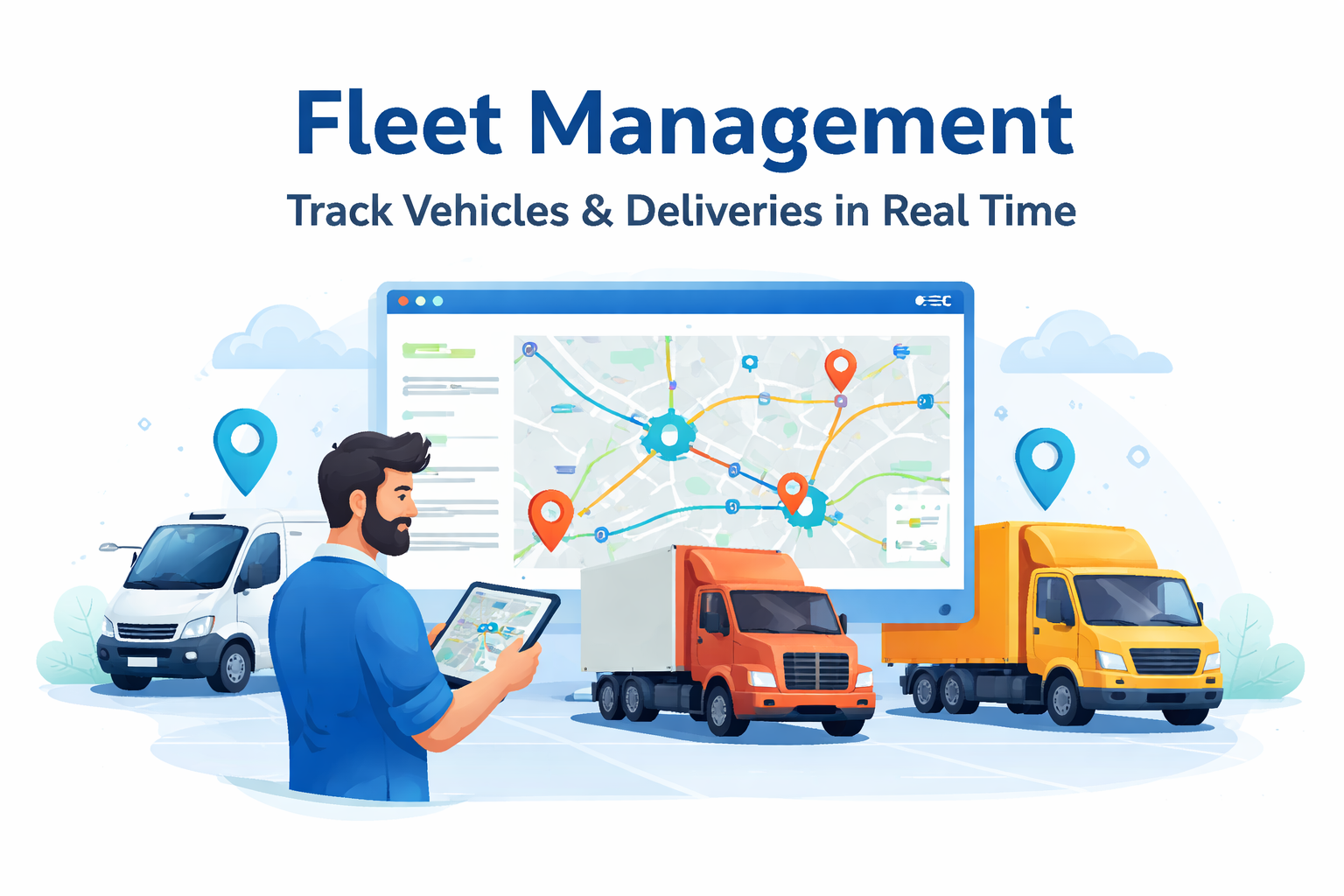
Fleet Management: How to Track Vehicles and Deliveries in Real Time (Complete 2026 Guide)
22
Mar
When Every Second on the Road Matters
Imagine running a delivery business where drivers disappear into traffic, customers keep calling for updates, and every delay feels like money quietly slipping away.
Now imagine the opposite.
You open a dashboard and instantly see every vehicle moving across the city like pieces on a chessboard. You know who’s ahead, who’s delayed, and exactly what to do next—before problems even happen.
That’s the quiet power of real-time fleet tracking.
In this guide, you’ll discover how it works, why it matters, and how to use it to transform your operations from reactive chaos into confident control.
What is Fleet Management?
Fleet management is the system of overseeing and coordinating a company’s vehicles to ensure efficiency, safety, and cost control.
It typically includes:
-
Tracking vehicle locations
-
Monitoring driver behavior
-
Managing fuel usage
-
Scheduling maintenance
-
Optimizing delivery routes
At its core, fleet management is about turning movement into measurable, controllable performance.
What is Real-Time Vehicle and Delivery Tracking?
Real-time tracking allows you to monitor your vehicles and deliveries live, as they move.
Unlike traditional systems that show updates after the fact, real-time tracking gives you:
-
Instant location updates
-
Live delivery progress
-
Immediate alerts for issues
Technologies Behind It
-
GPS (Global Positioning System): Determines vehicle location
-
Mobile Networks: Transmit data continuously
-
Cloud Platforms: Store and process information
-
Dashboards & Apps: Display insights in real time
Think of it as giving your entire fleet a digital voice constantly reporting back.
How Real-Time Fleet Tracking Works
Here’s a simple breakdown:
-
A GPS device is installed in each vehicle
-
The device collects location and movement data
-
Data is transmitted via internet/mobile networks
-
A cloud system processes the information
-
You view everything on a dashboard in real time
Key Features You’ll See
-
Live Map Tracking: See all vehicles instantly
-
Route Playback: Review past journeys
-
Geofencing: Get alerts when vehicles enter or leave zones
-
Driver Monitoring: Track speed, stops, and behavior
Why Real-Time Tracking Changes Everything
1. Operational Efficiency
-
Faster route adjustments
-
Reduced delays
-
Better coordination across teams
2. Cost Savings
-
Lower fuel consumption
-
Reduced idle time
-
Less vehicle misuse
3. Improved Customer Experience
-
Accurate delivery times
-
Real-time updates
-
Fewer complaints
4. Increased Security
-
Theft prevention
-
Instant alerts for unusual activity
-
Faster recovery of lost vehicles
Tools You Need for Real-Time Fleet Tracking
To make this work, you’ll need a combination of tools:
1. GPS Tracking Devices
Installed inside vehicles to collect location data.
2. Fleet Management Software
The central system that displays, analyzes, and manages your fleet.
3. Mobile Apps
Used by drivers and managers for updates and communication.
How to Choose the Right Fleet Tracking System
Not all systems are created equal. Here’s what to look for:
1. Ease of Use
If it feels complicated, your team won’t use it consistently.
2. Scalability
Choose a system that grows with your business.
3. Real-Time Accuracy
Delays in updates defeat the purpose.
4. Integration
Ensure it works with your existing tools (CRM, logistics, payments).
5. Support & Reliability
Downtime can cost you more than the software itself.
Common Challenges (And How to Solve Them)
Challenge 1: High Setup Costs
Solution: Start small with essential features and scale gradually.
Challenge 2: Poor Network Coverage
Solution: Use systems with offline tracking and delayed syncing.
Challenge 3: Data Overload
Solution: Focus only on actionable metrics (location, delays, fuel usage).
Challenge 4: Driver Resistance
Solution: Position tracking as a support tool, not surveillance.
Best Practices for Smarter Fleet Management
-
Review routes weekly and optimize constantly
-
Monitor driver behavior and reward efficiency
-
Schedule preventive maintenance
-
Use data to guide decisions—not guesswork
-
Automate reports to save time
Real-World Applications
Real-time tracking is transforming industries like:
-
E-commerce: Faster, predictable deliveries
-
Logistics Companies: Better coordination across regions
-
Food Delivery Services: Accurate ETAs and fresher deliveries
-
Field Service Businesses: Efficient technician dispatch
The Future of Fleet Management
The road ahead is even more exciting.
-
AI-powered route optimization will predict traffic before it happens
-
Predictive maintenance will fix vehicles before they break down
-
Automation will reduce human error
-
Smart city integration will improve delivery flow
The future isn’t just about tracking vehicles it’s about orchestrating movement intelligently.
Conclusion: From Chaos to Control
Running a fleet without real-time tracking is like navigating without a map.
But with the right system, everything changes.
You gain visibility.
You gain control.
You gain confidence in every decision.
And in a world where speed and reliability define success, that advantage is everything.
Now is the moment to move from guessing… to knowing.
Frequently Asked Questions (FAQs)
1. What is the best fleet tracking system?
The best system depends on your business size, budget, and needs. Look for one with real-time updates, ease of use, and strong support.
2. How accurate is GPS vehicle tracking?
Most GPS systems are accurate within a few meters, especially in urban environments with strong network coverage.
3. Can small businesses use fleet management systems?
Yes. Many solutions are designed specifically for small businesses and offer affordable entry plans.
4. How much does fleet tracking cost?
Costs vary based on features and number of vehicles. Basic systems can start small and scale as your business grows.
5. Does real-time tracking improve delivery speed?
Yes. It allows better route planning, reduces delays, and helps respond quickly to unexpected situations.
6. Is fleet tracking safe for drivers?
Yes, when implemented correctly. It enhances safety by monitoring driving behavior and providing support during emergencies.