- hello@daggloballtd.com
- No. 3 Ebong Close Wealth avenue, Palmsbay estate Abijo G.R.A. Lekki Epe exrpress way, Lagos State, Nigeria

How to Digitize Business Operations Without Breaking the Bank
25
Mar
When Growth Starts to Feel Heavy
There’s a moment every growing business experiences.
Orders are coming in. Messages are piling up. Spreadsheets are multiplying like weeds. And suddenly, what once felt like progress starts to feel like pressure.
You’re working harder but not smarter.
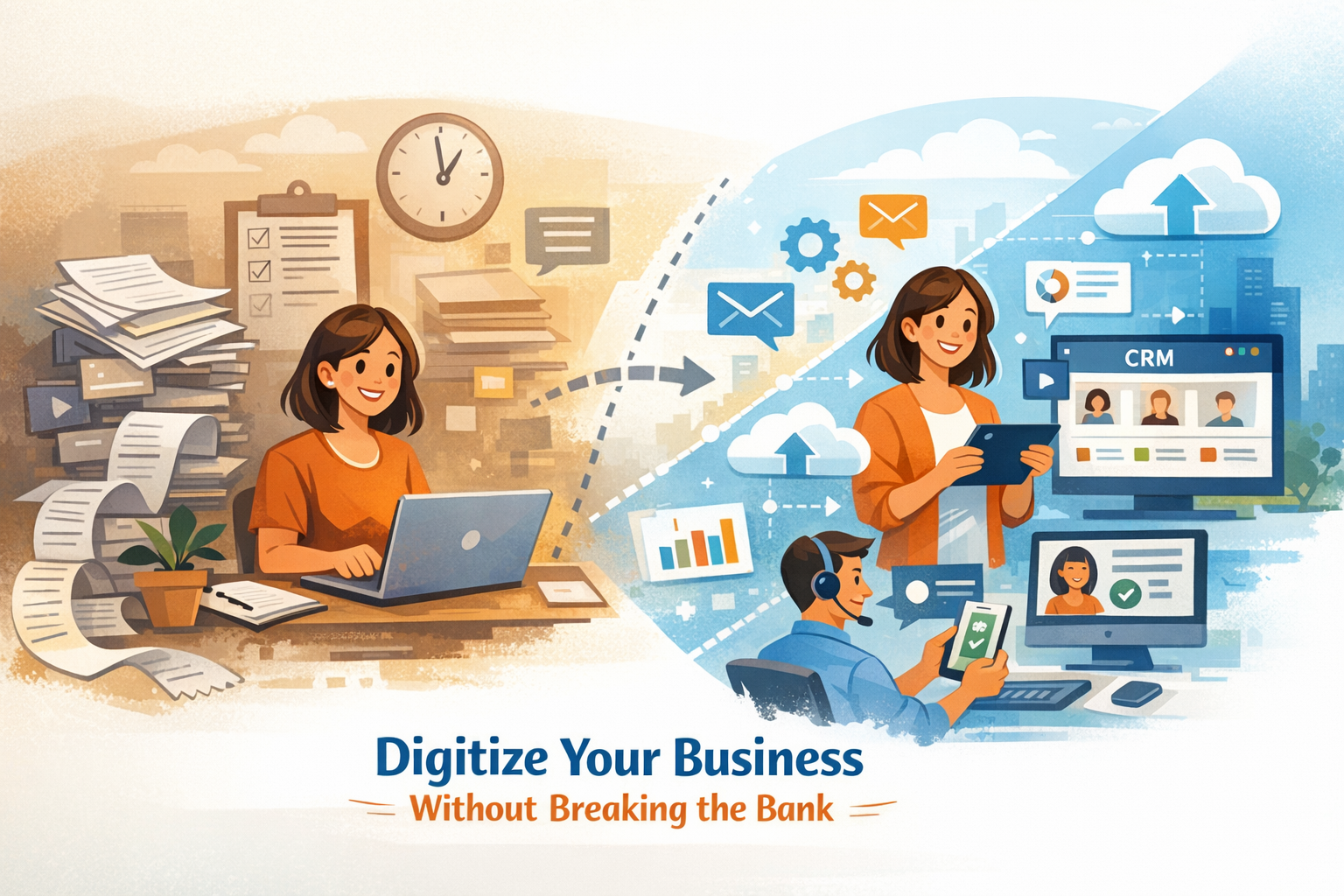
That’s where digitization quietly steps in. Not as an expensive overhaul, but as a series of small, smart shifts that turn chaos into clarity.
And here’s the truth most people don’t tell you:
You don’t need a massive budget to run a digitally efficient business.
You just need the right approach.
What Does Digitizing Business Operations Really Mean?
Digitizing your business isn’t about becoming a tech giant overnight.
It simply means replacing manual, repetitive processes with digital tools that make work faster, easier, and more reliable.
Think of it like this:
-
Instead of tracking sales in a notebook → you use simple accounting software
-
Instead of endless WhatsApp confusion → you organize communication in one place
-
Instead of chasing customers manually → you automate follow-ups
It’s not about complexity.
It’s about control, clarity, and consistency.
Why Many Businesses Spend Too Much (And Regret It Later)
A lot of businesses jump into digitization with excitement… and come out overwhelmed.
Here’s why:
-
They try to digitize everything at once
-
They buy expensive tools they don’t fully use
-
They skip planning and rush implementation
-
They confuse “popular” tools with “useful” tools
The result?
Money spent. Little value gained.
But the smartest businesses take a different route.
They move step by step intentionally.
A Smarter, Affordable Way to Digitize Your Business
1. Start With What Slows You Down
Every business has one thing that drains time and energy.
Find yours.
It could be:
-
Manual invoicing
-
Customer follow-ups
-
Tracking inventory
-
Managing team communication
Start there. Fix one problem first.
That single improvement can unlock surprising growth.
2. Define a Budget That Feels Comfortable
You don’t need to spend big to grow smart.
Set a budget that:
-
Doesn’t strain your business
-
Allows gradual upgrades
-
Focuses on value, not hype
Remember:
Consistency beats intensity.
3. Use Free and Low-Cost Tools First
Some of the most powerful tools today are either free or very affordable.
Look for tools that:
-
Offer free plans
-
Are easy to use
-
Can grow with your business
You don’t need ten tools.
You need the right few.
4. Automate the Small Things
Small automations create big breathing space.
Start with:
-
Automatic email replies
-
Invoice generation
-
Appointment scheduling
-
Customer reminders
These are the silent systems that work while you rest.
5. Move to the Cloud (Without Overthinking It)
Cloud-based tools are a game changer because they:
-
Don’t require expensive hardware
-
Let you work from anywhere
-
Grow as your business grows
It’s like turning your business into something that moves with you light, flexible, and always accessible.
6. Bring Your Team Along, Not Behind
Technology only works when people use it.
Introduce changes gradually:
-
Show your team how tools help them
-
Keep training simple
-
Encourage feedback
When people feel involved, they don’t resist change they support it.
7. Measure What Matters
Don’t just implement observe.
Track:
-
Time saved
-
Tasks completed faster
-
Reduction in errors
-
Customer response time
These small wins are proof that your system is working.
Simple Digital Tools That Won’t Drain Your Budget
You don’t need luxury software to run a smart business.
Start with basic categories:
-
Communication tools → organize conversations
-
Project management tools → track tasks easily
-
Accounting tools → simplify finances
-
CRM tools → manage customers better
-
Marketing tools → automate outreach
The goal isn’t to impress it’s to improve.
Common Mistakes to Avoid
Even with the best intentions, it’s easy to go off track.
Watch out for these:
-
Trying to do everything at once
-
Ignoring your team’s experience
-
Choosing tools without testing them
-
Forgetting about data security
-
Not tracking results
Digital growth should feel like progress not pressure.
A Short Story: The Shift That Changed Everything
A small business owner once spent hours every evening updating records manually.
It was exhausting. Growth felt like a burden.
Then one week, they made a simple change just one.
They started using a basic invoicing tool.
Invoices became faster. Records became clearer. Even customer trust improved.
That one small shift led to another… and another.
Months later, the business wasn’t just surviving it was flowing.
Not because of a huge investment.
But because of small, intentional steps.
Your 7-Day Action Plan to Get Started
If you’re wondering where to begin, start here:
-
Day 1–2: Identify your biggest bottleneck
-
Day 3–4: Explore simple tools
-
Day 5: Choose one tool
-
Day 6: Implement it
-
Day 7: Review the impact
That’s it.
No pressure. No overwhelm. Just progress.
The Real Value of Digitization (Beyond Money)
When done right, digitization gives you more than efficiency.
It gives you:
-
Time to think
-
Space to grow
-
Confidence to scale
-
Freedom to focus on what truly matters
And that’s something no price tag can measure.
Conclusion: Start Small, Grow Smart
You don’t need millions to modernize your business.
You need awareness.
You need intention.
You need to start.
Because the businesses that win today aren’t the ones that spend the most—
they’re the ones that adapt the smartest.
So take the first step.
Even if it feels small.
Especially if it feels small.
FAQs
1. Can I digitize my business with little or no budget?
Yes. Many tools offer free plans, and you can start with just one or two key areas before expanding gradually.
2. What is the first thing I should digitize?
Start with the most time-consuming or repetitive task in your business. That’s where you’ll see the fastest results.
3. Do I need technical skills to go digital?
Not at all. Most modern tools are designed to be user-friendly and require little to no technical knowledge.
4. How long does it take to see results?
You can start seeing improvements within days, especially when you automate simple tasks.
5. Is digitization only for big companies?
No. In fact, small businesses benefit even more because digital tools help them compete efficiently with larger competitors.
6. What if my team resists new tools?
Introduce tools gradually, explain the benefits clearly, and involve them in the process. People adapt faster when they feel included.
7. How do I know if a tool is worth it?
Test free versions first. If it saves time, reduces stress, or improves workflow, it’s worth considering.