
- hello@daggloballtd.com
- No. 3 Ebong Close Wealth avenue, Palmsbay estate Abijo G.R.A. Lekki Epe exrpress way, Lagos State, Nigeria

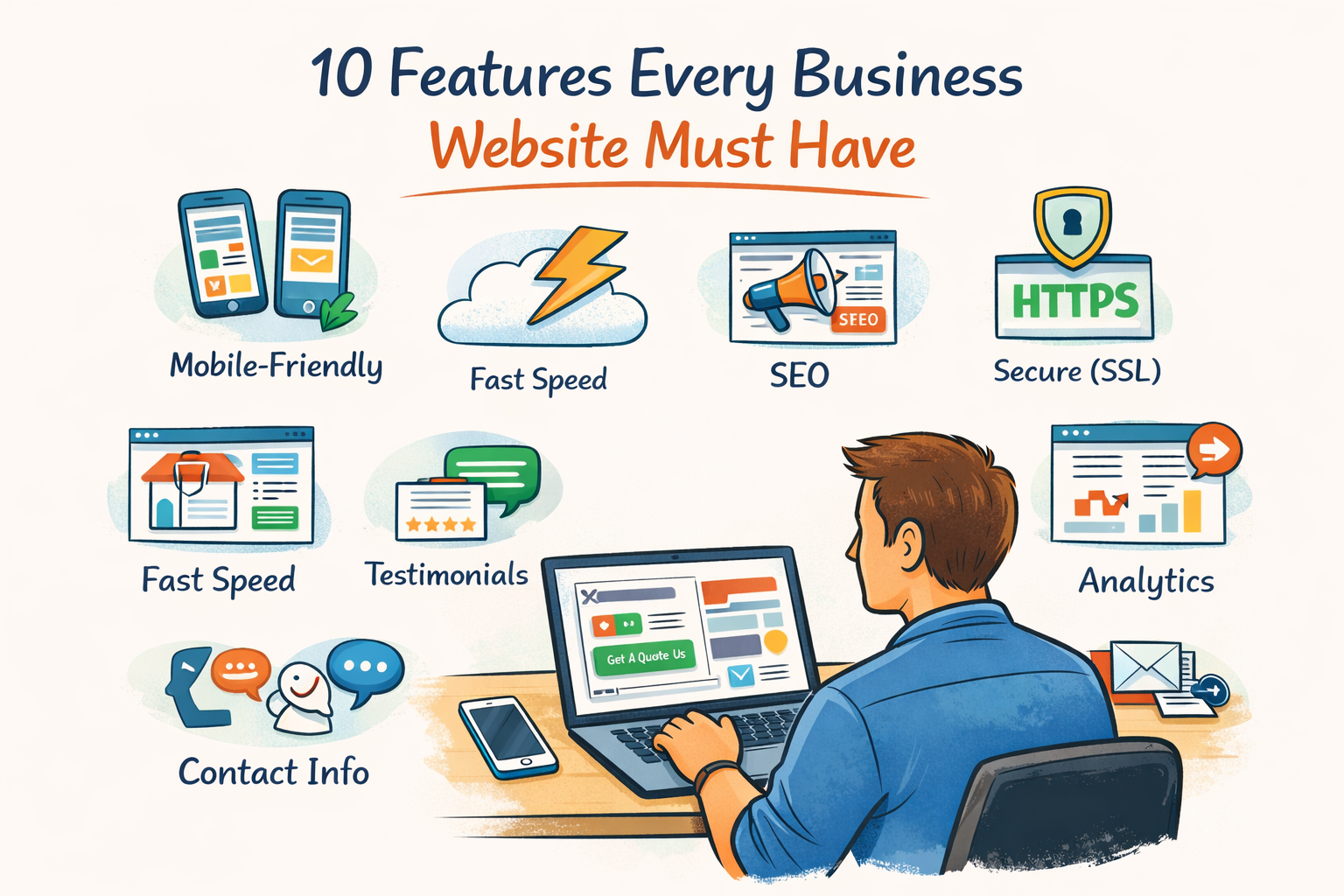
10 Features Every Business Website Must Have
06
Mar
A business website is often the first place people interact with your brand. Before visiting a store, calling a phone number, or making a purchase, most customers search online. When they land on your website, they form an opinion about your business within seconds.
Many businesses still underestimate how powerful a well-designed website can be. In reality, a professional website is often the foundation of a company’s entire digital presence. If you want a deeper understanding of this, you can explore our detailed guide on Why Every Business Needs a Professional Website in 2026, where we explain how a website can transform visibility, credibility, and customer growth.Many businesses make the mistake of creating a website simply because they feel they “should have one.” But a successful website is more than just a digital brochure. It should guide visitors, answer their questions, and encourage them to take action.
If you’re planning to build or improve a business website, there are certain features that simply cannot be ignored. In this guide, we’ll explore 10 essential features every business website must have to attract visitors, keep them engaged, and convert them into customers.
Why Every Business Needs a Professional Website
Before diving into the features, it’s important to understand why a business website matters so much today.
Consumers rely heavily on the internet to research products and services. If someone hears about your business, one of the first things they’ll likely do is search for you online. If they cannot find a website—or if the website looks outdated—they may question the credibility of the business.
A professional website acts like a 24-hour sales representative. It introduces your brand, explains what you offer, and helps potential customers decide whether they want to work with you.
For many businesses, the website also serves as the center of their digital marketing strategy. Social media, advertising campaigns, and search engine results often lead people directly to the website.
Simply put, a strong website helps businesses stay competitive in the modern marketplace.
1. Mobile-Friendly (Responsive) Design
Today, most people browse the internet using smartphones. If your website doesn’t work properly on mobile devices, you could lose a large portion of potential customers.
A mobile-friendly website automatically adjusts to fit different screen sizes, whether someone is using a smartphone, tablet, or desktop computer.
Responsive design improves the user experience by making it easier to read text, navigate menus, and interact with buttons on smaller screens.
Search engines also prioritize mobile-friendly websites in search results. This means that having a responsive design can improve your website’s visibility online.
A good mobile website should include:
-
Easy-to-read text without zooming
-
Simple navigation menus
-
Fast loading pages
-
Buttons that are easy to tap on smaller screens
If visitors struggle to use your website on their phone, they’ll likely leave within seconds.
2. Fast Loading Speed
Speed is one of the most critical elements of a successful website. People expect websites to load quickly, and most visitors won’t wait more than a few seconds for a page to open.
A slow website can lead to high bounce rates, meaning visitors leave before exploring your content.
Several factors can affect website speed, including:
-
Large image files
-
Poor web hosting services
-
Too many plugins or scripts
-
Unoptimized code
Fast websites create a smoother experience for users and also perform better in search engine rankings.
To keep your website fast:
-
Compress images before uploading
-
Use reliable hosting services
-
Avoid unnecessary plugins
-
Optimize your website structure
A few seconds may not seem like much, but in the online world, speed makes a huge difference.
3. Clear and Simple Navigation
Visitors should be able to find what they’re looking for without confusion. If your website navigation is complicated, people will leave rather than trying to figure it out.
Simple navigation helps users move easily between different sections of your website.
A good website menu typically includes pages such as:
-
Home
-
About Us
-
Services or Products
-
Blog or Resources
-
Contact
Clear navigation improves the overall user experience and helps visitors quickly locate important information.
It also helps search engines understand the structure of your website, which can improve your visibility in search results.
4. Strong Call-to-Action (CTA)
Every business website should guide visitors toward a specific action.
This is where call-to-action buttons come in. A call-to-action encourages users to take the next step, whether it’s contacting your business, making a purchase, or booking a consultation.
Common examples of effective CTAs include:
-
Get a Free Quote
-
Book a Consultation
-
Contact Us
-
Start Your Free Trial
-
Buy Now
These prompts should be visible and placed strategically across your website.
Without clear calls to action, visitors may leave without taking any step toward becoming a customer.
5. High-Quality Content
Content plays a huge role in building trust with your audience.
Your website should clearly explain:
-
What your business does
-
The products or services you offer
-
How customers benefit from working with you
High-quality content helps visitors understand your value and positions your business as an expert in your field.
Examples of useful content include:
-
Service pages
-
Blog articles
-
Customer guides
-
Case studies
-
Frequently asked questions
Well-written content also helps your website rank better in search engines, bringing more visitors to your site.
6. Search Engine Optimization (SEO)
Search Engine Optimization (SEO) helps your website appear in search engine results when people look for products or services related to your business.
Without SEO, even the best website may remain invisible online.
Important SEO elements include:
-
Keyword optimization
-
Clear page titles and meta descriptions
-
Internal linking between pages
-
Optimized images
-
High-quality content
SEO is not a one-time task. It requires consistent updates and improvements over time.
Businesses that invest in SEO often benefit from steady organic traffic without relying entirely on paid advertising.
7. Contact Information and Communication Options
Your website should make it easy for customers to reach you.
Visitors shouldn’t have to search through multiple pages just to find a phone number or email address.
Essential contact options include:
-
Contact form
-
Phone number
-
Email address
-
Physical location (if applicable)
Some businesses also include additional communication tools such as:
-
Live chat
-
WhatsApp chat buttons
-
Social media links
The easier it is for customers to contact you, the more likely they are to become paying clients.
8. Security Features (SSL Certificate)
Website security is extremely important, especially if your website collects personal information or processes payments.
An SSL certificate protects data transmitted between your website and its visitors.
You can usually recognize secure websites by the “HTTPS” at the beginning of the web address.
Secure websites help build trust with visitors because they know their information is protected.
Without proper security measures, users may hesitate to share details such as their contact information or payment data.
9. Customer Testimonials and Reviews
People trust other customers more than marketing messages.
That’s why testimonials and reviews are powerful tools for building credibility.
When potential customers see positive feedback from real clients, they feel more confident about choosing your business.
Testimonials can appear in several forms:
-
Written reviews
-
Video testimonials
-
Case studies
-
Ratings
Adding testimonials to your website helps demonstrate real-world results and strengthens trust in your brand.
10. Analytics and Performance Tracking
A business website should not operate blindly. Tracking data helps you understand how visitors interact with your site.
Website analytics tools provide insights such as:
-
How many people visit your website
-
Which pages they view most
-
How long they stay on your site
-
Where they come from
This information helps you identify what’s working and what needs improvement.
With the right data, businesses can make smarter decisions to improve website performance and increase conversions.
Frequently Asked Questions (FAQs)
Why is a website important for a business?
A website helps businesses establish credibility, reach more customers, and provide information about their products or services. It also allows businesses to attract customers online and operate beyond physical location limitations.
How much does it cost to build a business website?
The cost varies depending on the complexity of the website. A simple website may cost a few hundred dollars, while more advanced websites with custom features can cost several thousand dollars.
How often should a business website be updated?
Websites should be updated regularly. This may include updating content, adding blog posts, improving security, or refreshing the design to keep the website modern and relevant.
What makes a business website successful?
A successful website combines good design, fast loading speed, helpful content, clear navigation, and strong calls to action. These elements work together to create a positive user experience and encourage visitors to take action.
Can a small business succeed without a website?
While it is possible, it is much harder. Many customers expect businesses to have an online presence. Without a website, a business may lose opportunities to competitors who are easier to find online.
Conclusion
A business website is much more than a digital placeholder. When designed properly, it becomes a powerful tool for attracting visitors, building trust, and converting leads into customers.
From mobile-friendly design and fast loading speed to strong calls-to-action and secure browsing, every feature plays a role in shaping the user experience.
Businesses that invest in these essential website features create a stronger online presence and position themselves for long-term growth.
If your website includes these ten features, you’ll be well on your way to building a platform that not only looks professional but also works effectively for your business.