- hello@daggloballtd.com
- No. 3 Ebong Close Wealth avenue, Palmsbay estate Abijo G.R.A. Lekki Epe exrpress way, Lagos State, Nigeria

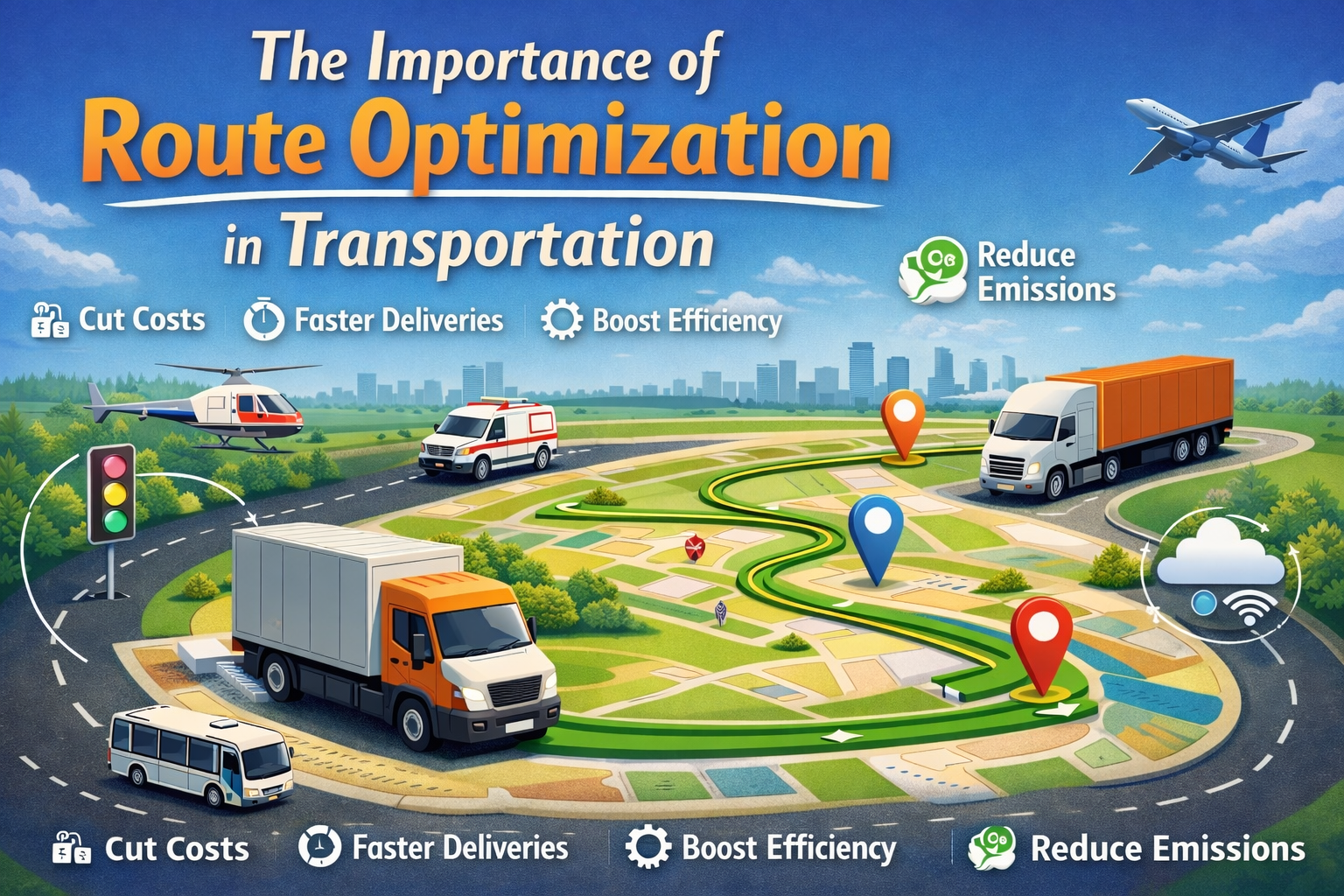
The Importance of Route Optimization in Transportation: Turning Every Mile into Measurable Value
28
Feb
Transportation is the bloodstream of modern commerce. Every parcel delivered, every shipment dispatched, every passenger transported depends on one simple thing: the route. Yet here’s the kicker most businesses still treat routing like a basic direction map instead of a strategic weapon.
In a world where customers expect lightning-fast deliveries and fuel prices rarely play nice, inefficient routes quietly drain profits. What seems like “just a few extra miles” can snowball into thousands in wasted fuel, overtime pay, and missed opportunities.
So, why does route optimization matter so much? And how can it transform transportation from a cost center into a competitive advantage?
Let’s unpack The Importance of Route Optimization in Transportation and explore how smarter routes create stronger businesses.
Imagine two delivery vans leaving the same warehouse, headed to similar destinations. One follows a pre-planned, data-driven route accounting for traffic patterns, delivery windows, and fuel efficiency. The other? It relies on static maps and guesswork.
By the end of the day, one vehicle has saved fuel, met every deadline, and returned early. The other is stuck in traffic, burning gas, and arriving late.
That difference that invisible edge is route optimization in action.
At its core, route optimization is about making every mile count. It’s about eliminating waste, improving speed, and delivering value with precision. In today’s competitive logistics environment, it’s no longer optional it’s essential.
What is Route Optimization?
Understanding the Core Concept
Route optimization goes beyond simply choosing the shortest path between two points. Instead, it identifies the most efficient route based on multiple variables, including:
-
Traffic conditions
-
Delivery time windows
-
Vehicle capacity
-
Fuel consumption
-
Road restrictions
-
Weather patterns
In other words, it doesn’t just ask, “What’s the shortest way?” It asks, “What’s the smartest way?”
While traditional route planning focuses on static directions, route optimization dynamically adjusts routes in real time. It’s proactive rather than reactive.
How Route Optimization Works
Behind the scenes, sophisticated algorithms crunch enormous amounts of data. These systems analyze variables such as:
-
Historical traffic trends
-
Live road congestion data
-
Driver schedules
-
Customer locations
-
Vehicle performance metrics
Using artificial intelligence and predictive analytics, optimized routes are calculated almost instantly. And when conditions change say, a road closure or sudden congestion the system recalculates on the fly.
No guesswork. No outdated maps. Just smart, responsive decision-making.
The Importance of Route Optimization in Transportation Today
Transportation has changed dramatically over the past decade. E-commerce has exploded, customer expectations have skyrocketed, and operating costs continue to climb.
So, what makes route optimization indispensable?
1. Rising Operational Costs
Fuel isn’t cheap. Vehicle maintenance isn’t cheap. Labor certainly isn’t cheap.
Every unnecessary mile adds:
-
Extra fuel consumption
-
Increased vehicle wear and tear
-
Higher maintenance costs
-
Additional driver hours
Multiply that by dozens or hundreds of vehicles, and the financial impact becomes massive.
Optimized routing reduces these inefficiencies, protecting margins that might otherwise disappear.
2. Escalating Customer Expectations
Let’s face it customers want everything yesterday. Same-day delivery, real-time tracking, accurate arrival estimates—it’s the new normal.
Missed delivery windows don’t just inconvenience customers; they damage brand trust.
Route optimization ensures:
-
Accurate estimated times of arrival (ETAs)
-
On-time delivery consistency
-
Improved communication with customers
And trust me, reliability builds loyalty.
3. Environmental Sustainability Pressures
Governments and consumers alike are pushing for greener operations. Companies are expected to reduce carbon footprints and adopt sustainable practices.
Efficient routing:
-
Minimizes fuel consumption
-
Reduces carbon emissions
-
Cuts idle engine time
-
Supports corporate sustainability goals
Doing good for the planet often means doing good for your bottom line, too.
Key Benefits of The Importance of Route Optimization in Transportation
Let’s dive deeper into the tangible advantages.
Reduced Fuel Consumption
Fuel costs represent a significant portion of transportation budgets. Optimized routes eliminate unnecessary detours and idle time, which directly lowers fuel usage.
Even a modest 10% reduction in fuel consumption can translate into substantial annual savings.
Lower Operational Expenses
Route optimization improves:
-
Fleet utilization
-
Driver scheduling
-
Maintenance planning
Fewer miles mean less mechanical stress. Less stress means fewer breakdowns. Fewer breakdowns mean reduced repair costs.
It’s a domino effect one positive change triggers another.
Improved Delivery Speed and Reliability
Time is money, and in logistics, it’s also reputation.
Optimized routes ensure:
-
Shorter delivery cycles
-
Balanced workloads among drivers
-
Reduced bottlenecks
As a result, businesses can handle more deliveries in less time without expanding their fleet.
Enhanced Driver Productivity and Safety
Driver fatigue is a serious issue in transportation. Long, inefficient routes increase stress and reduce focus.
Smarter routing:
-
Distributes workloads evenly
-
Avoids congested and hazardous roads
-
Reduces overtime
A safer, less stressed driver is a more productive driver.
The Importance of Route Optimization in Transportation Across Industries
Route optimization isn’t just for delivery vans it touches nearly every transportation sector.
Logistics and E-commerce
Last-mile delivery is notoriously complex. Multiple stops, tight deadlines, and unpredictable traffic make it challenging.
Optimized routing helps manage:
-
High order volumes
-
Time-sensitive deliveries
-
Route clustering for efficiency
Public Transportation
Cities rely on efficient bus and transit routes to reduce congestion and wait times.
Optimized public transit routes improve:
-
Passenger satisfaction
-
Schedule reliability
-
Fuel efficiency
Freight and Cargo Transport
Long-haul freight operations benefit immensely from advanced routing systems that account for:
-
Road restrictions
-
Toll costs
-
Border checkpoints
-
Rest-stop regulations
Even minor route adjustments can yield major cost savings.
Emergency and Medical Services
In emergencies, seconds matter.
Optimized routing ensures:
-
Faster response times
-
Efficient resource allocation
-
Improved coverage areas
Lives can quite literally depend on it.
Common Challenges in Route Optimization
Of course, no system is flawless. Several challenges can arise:
-
Unpredictable traffic incidents
-
Sudden weather changes
-
Inaccurate data inputs
-
Complex multi-stop schedules
However, advanced technologies continue to improve accuracy and adaptability, minimizing these risks.
Route Optimization vs. Traditional Route Planning
Let’s compare the two approaches:
Traditional Planning Route Optimization Static routes Dynamic real-time adjustments Manual decision-making Data-driven algorithms Limited traffic insights Live traffic integration Higher fuel costs Reduced fuel usage Increased delivery delays Improved punctuality
The difference is night and day.
How to Implement Route Optimization in Your Business
Ready to make the shift? Here’s how to get started.
Step 1: Analyze Current Inefficiencies
Identify:
-
Average fuel costs per vehicle
-
On-time delivery rates
-
Idle time duration
-
Vehicle utilization metrics
You can’t improve what you don’t measure.
Step 2: Choose the Right Technology
Look for software that includes:
-
Real-time traffic monitoring
-
Multi-stop optimization
-
GPS integration
-
Reporting dashboards
Scalability matters choose a system that grows with your business.
Step 3: Train Drivers and Teams
Technology is only as good as the people using it.
Provide training sessions to ensure drivers understand how optimized routes benefit them personally—less stress, fewer delays, better work-life balance.
Step 4: Monitor and Refine
Route optimization isn’t a “set it and forget it” tool. Regularly analyze performance data and adjust strategies accordingly.
Continuous improvement keeps you ahead of the curve.
The Future of The Importance of Route Optimization in Transportation
The road ahead looks promising.
Emerging innovations include:
-
Autonomous vehicle routing systems
-
AI-powered predictive traffic models
-
Smart city infrastructure integration
-
Electric vehicle-specific route planning
As transportation becomes more connected and intelligent, route optimization will only grow more powerful.
Frequently Asked Questions (FAQs)
What is the difference between route planning and route optimization?
Route planning identifies a path between locations, while route optimization analyzes multiple variables to determine the most efficient and cost-effective route?
How much can businesses save with route optimization?
Savings vary, but many companies report reductions in fuel costs ranging from 10% to 30%, alongside improved delivery performance?
Is route optimization suitable for small businesses?
Absolutely. Even small fleets benefit from reduced fuel usage, better scheduling, and improved customer satisfaction?
Does route optimization reduce environmental impact?
Yes. By minimizing unnecessary mileage and idle time, route optimization significantly reduces carbon emissions?
Can route optimization improve driver morale?
Definitely. Balanced workloads, fewer delays, and less stress contribute to higher driver satisfaction?
Conclusion: Why The Importance of Route Optimization in Transportation Can’t Be Ignored
Transportation is no longer just about moving goods from point A to point B. It’s about doing so intelligently, sustainably, and profitably.
The Importance of Route Optimization in Transportation lies in its ability to transform inefficiency into opportunity. It reduces costs. It strengthens reliability. It enhances sustainability. It improves safety. And perhaps most importantly, it gives businesses a competitive edge in an increasingly demanding market.
In today’s landscape, inefficient routing isn’t just inconvenient it’s expensive.
So, the real question is: can your business afford not to optimize?
When every mile matters, smart routing isn’t a luxury it’s the road to long-term success.