- hello@daggloballtd.com
- No. 3 Ebong Close Wealth avenue, Palmsbay estate Abijo G.R.A. Lekki Epe exrpress way, Lagos State, Nigeria

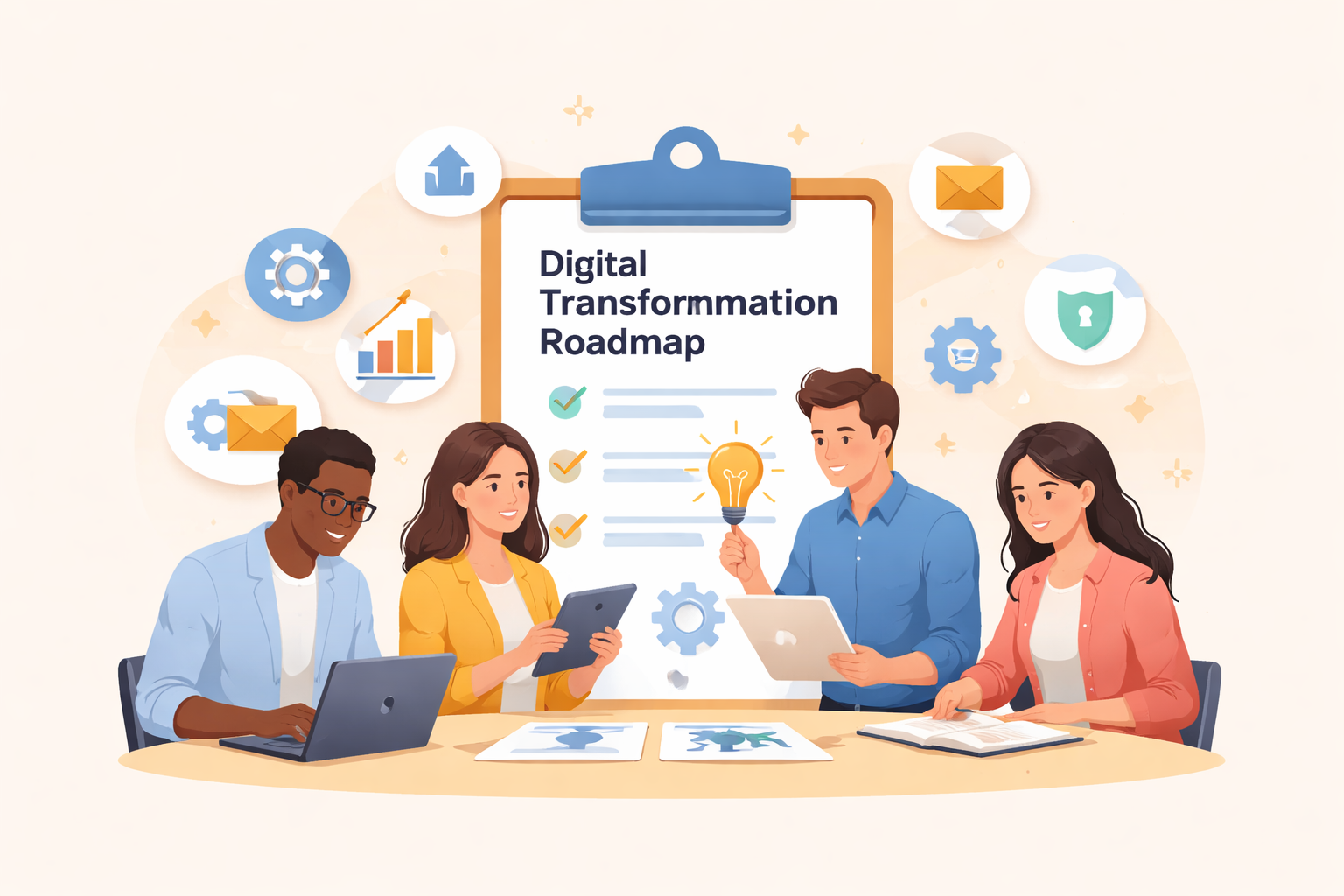
Digital Transformation Roadmap: Step-by-Step Guide for SMEs
16
Mar
Across the world, businesses are rapidly shifting toward digital operations. Customers expect faster services, personalized experiences, and seamless interactions across multiple channels. For small and medium-sized enterprises (SMEs), keeping up with these expectations can feel overwhelming.
Many SMEs know they need digital transformation but struggle with where to start, what technology to adopt, and how to manage the process effectively. Without a clear plan, digital initiatives often become expensive experiments that fail to deliver results.
This is where a digital transformation roadmap becomes essential.
A well-structured roadmap helps SMEs move from traditional processes to efficient digital operations step by step. Instead of guessing what to implement, businesses can follow a strategic plan that aligns technology with their goals.
In this guide, you will learn:
-
What digital transformation means for SMEs
-
Why it is critical for business growth
-
The benefits and challenges involved
-
A step-by-step roadmap to implement digital transformation successfully
What Is Digital Transformation?
Digital transformation refers to the integration of digital technologies into all areas of a business to improve operations, customer experience, and decision-making.
It involves rethinking how a company operates, delivers value to customers, and adapts to a technology-driven market.
Digitization vs Digitalization vs Digital Transformation
Understanding these terms helps clarify the process.
Digitization
This is simply converting physical information into digital form.
Example:
-
Scanning paper documents
-
Converting manual records into digital files
Digitalization
Digitalization uses technology to improve existing processes.
Example:
-
Online billing systems
-
Digital marketing platforms
-
CRM software
Digital Transformation
Digital transformation goes further. It changes how businesses operate, compete, and grow using technology.
Example:
-
Automating operations
-
Data-driven decision making
-
Creating digital customer experiences
For SMEs, digital transformation is about using technology strategically to grow faster and compete effectively.
Benefits of Digital Transformation for SMEs
When implemented correctly, digital transformation offers powerful advantages.
1. Increased Operational Efficiency
Automation reduces repetitive manual tasks, allowing employees to focus on higher-value activities.
Examples include:
-
Automated accounting systems
-
Inventory management tools
-
Customer support chatbots
These systems reduce errors and save time.
2. Reduced Operational Costs
Digital tools help businesses cut costs in several ways:
-
Paperless documentation
-
Remote work capabilities
-
Automated workflows
SMEs can operate more efficiently while spending less on physical infrastructure.
3. Improved Customer Experience
Digital transformation allows businesses to interact with customers in smarter ways.
Examples include:
-
Personalized recommendations
-
Faster support responses
-
Omnichannel communication
Happy customers are more likely to return and recommend the business.
4. Access to Global Markets
With digital platforms such as e-commerce websites and online marketplaces, SMEs are no longer limited to local markets.
Businesses can now:
-
Sell products internationally
-
Reach customers through social media
-
Accept digital payments worldwide
5. Data-Driven Decision Making
Digital systems collect valuable data about customers, sales, and operations.
Businesses can analyze this data to:
-
Identify market trends
-
Understand customer behavior
-
Improve product offerings
Better insights lead to smarter business decisions.
Common Challenges SMEs Face in Digital Transformation
Despite its benefits, digital transformation comes with challenges.
Limited Budget
Many SMEs operate with tight budgets, making large technology investments difficult.
Lack of Technical Expertise
Businesses may struggle to find skilled professionals who understand digital tools and systems.
Resistance to Change
Employees sometimes resist new technologies because they fear complexity or job displacement.
Cybersecurity Concerns
As businesses become more digital, protecting sensitive data becomes a critical responsibility.
Integration Issues
New technologies must work smoothly with existing systems. Poor integration can disrupt operations.
Recognizing these challenges helps businesses prepare for them.
What Is a Digital Transformation Roadmap?
A digital transformation roadmap is a strategic plan that outlines how a business will adopt digital technologies over time.
It provides:
-
Clear goals
-
Defined steps
-
Implementation timelines
-
Performance metrics
Instead of random technology adoption, businesses follow a structured transformation journey.
For SMEs, this roadmap helps maximize results while minimizing risks and unnecessary spending.
Step-by-Step Digital Transformation Roadmap for SMEs
Step 1: Assess Your Current Digital Maturity
Before implementing new technologies, businesses must understand their current digital capabilities.
Evaluate:
-
Existing technology infrastructure
-
Manual processes
-
Digital skills within the team
-
Customer interaction channels
A digital maturity assessment helps identify gaps and opportunities.
Step 2: Define Clear Business Goals
Technology should support business objectives.
Examples of digital transformation goals include:
-
Increasing revenue by 30%
-
Improving customer satisfaction
-
Reducing operational costs
-
Expanding into new markets
Clear goals ensure that technology investments deliver measurable value.
Step 3: Develop a Digital Strategy
Once goals are defined, the next step is creating a strategy to achieve them.
This involves:
-
Selecting appropriate technologies
-
Defining project timelines
-
Allocating resources and budgets
-
Identifying key stakeholders
A strong strategy ensures that digital transformation aligns with the company’s long-term vision.
Step 4: Build the Right Digital Infrastructure
Technology infrastructure forms the backbone of digital transformation.
Important components include:
Cloud Computing
Cloud platforms allow businesses to store data and run applications online instead of maintaining expensive servers.
Benefits include:
-
Scalability
-
Lower costs
-
Remote accessibility
Customer Relationship Management (CRM)
CRM systems help businesses manage customer interactions, track leads, and improve relationships.
Enterprise Resource Planning (ERP)
ERP systems integrate business processes such as:
-
Finance
-
Inventory
-
Procurement
-
Human resources
Collaboration Tools
Digital collaboration tools support remote work and team communication.
Examples include:
-
Project management platforms
-
Video conferencing tools
-
Team messaging apps
Step 5: Upskill Your Workforce
Technology alone does not transform a business. People play a crucial role.
Employees must be trained to use new digital tools effectively.
Businesses can:
-
Offer digital skills training
-
Encourage continuous learning
-
Hire technology specialists
-
Partner with digital consultants
Creating a digital-ready workforce ensures smooth adoption.
Step 6: Implement Transformation in Phases
Trying to digitize everything at once can create confusion and financial strain.
Instead, start with small pilot projects.
Examples include:
-
Launching an e-commerce platform
-
Implementing automated invoicing
-
Introducing digital marketing tools
Test results, gather feedback, and then scale successful initiatives.
Step 7: Focus on Customer Experience
Customer expectations have evolved in the digital era.
Businesses should design digital experiences that are:
-
Fast
-
Convenient
-
Personalized
Important strategies include:
-
Mobile-friendly websites
-
Online customer support
-
Data-driven personalization
Delivering superior experiences helps SMEs build long-term customer loyalty.
Step 8: Strengthen Cybersecurity Measures
Digital transformation increases exposure to cyber threats.
Businesses must implement strong security practices such as:
-
Data encryption
-
Multi-factor authentication
-
Secure cloud storage
-
Employee cybersecurity training
Protecting customer data builds trust and ensures regulatory compliance.
Step 9: Measure Performance and Optimize
Digital transformation is an ongoing process.
Businesses must track performance using key metrics such as:
-
Customer acquisition cost
-
Website conversion rates
-
Operational efficiency
-
Revenue growth
Continuous monitoring allows businesses to refine strategies and improve results over time.
Key Technologies Driving Digital Transformation
Several technologies are accelerating digital transformation for SMEs.
Artificial Intelligence (AI)
AI enables automation, predictive analytics, and intelligent decision-making.
Data Analytics
Analytics tools help businesses extract valuable insights from large datasets.
Internet of Things (IoT)
IoT devices connect physical objects to the internet, enabling real-time monitoring and automation.
E-Commerce Platforms
Online stores allow businesses to sell products globally without physical retail limitations.
Digital Payment Systems
Digital payments provide faster, safer transactions for businesses and customers.
Real-World Example of SME Digital Transformation
Consider a traditional retail store that relied solely on in-person sales.
To adapt to digital trends, the business implemented the following steps:
-
Built an e-commerce website
-
Adopted digital payment systems
-
Implemented CRM software to track customers
-
Used social media marketing to attract new buyers
-
Automated inventory management
Within a year, the business experienced:
-
Increased sales
-
Expanded customer reach
-
Improved operational efficiency
This demonstrates how structured digital transformation can produce measurable results.
Best Practices for Successful Digital Transformation
SMEs should follow several best practices to maximize success.
-
Start with a clear strategic vision
-
Focus on customer needs
-
Invest in scalable technologies
-
Encourage a digital-first culture
-
Partner with trusted technology providers
Digital transformation succeeds when technology, people, and strategy work together.
Mistakes SMEs Should Avoid
Common mistakes can derail digital transformation efforts.
These include:
-
Adopting technology without a clear strategy
-
Ignoring employee training
-
Underestimating cybersecurity risks
-
Expecting instant results
-
Implementing too many tools at once
Avoiding these pitfalls improves the chances of long-term success.
Future Trends in Digital Transformation
Digital transformation continues to evolve.
Important trends shaping the future include:
Artificial Intelligence Automation
AI will automate more business operations, improving efficiency and decision-making.
Remote and Hybrid Work
Cloud technologies and collaboration tools will continue supporting flexible work environments.
Low-Code and No-Code Platforms
These platforms allow businesses to build applications without advanced programming skills.
Advanced Data Analytics
Businesses will rely more on predictive analytics to anticipate customer needs and market changes.
Conclusion
Digital transformation is no longer a luxury reserved for large corporations. It has become a critical growth strategy for SMEs seeking to remain competitive in an increasingly digital world.
By following a structured digital transformation roadmap, businesses can adopt technology in a way that aligns with their goals, improves efficiency, and enhances customer experiences.
The key is to start small, remain strategic, and continuously refine digital initiatives as the business grows.
Organizations that embrace digital transformation today will be better positioned to innovate, scale, and succeed in the future.
Frequently Asked Questions (FAQs)
What is a digital transformation roadmap?
A digital transformation roadmap is a strategic plan that outlines how a business will adopt digital technologies to improve operations and achieve its goals.
Why is digital transformation important for SMEs?
Digital transformation helps SMEs increase efficiency, reduce costs, improve customer experiences, and compete effectively in the modern marketplace.
How long does digital transformation take?
Digital transformation is an ongoing process. While initial changes may take a few months, full transformation can take several years depending on the size and complexity of the business.
What is the first step in digital transformation?
The first step is assessing the current digital maturity of the business to identify gaps, opportunities, and areas for improvement.
Can small businesses afford digital transformation?
Yes. Many digital tools are scalable and affordable, allowing SMEs to start small and expand as their business grows.