
- hello@daggloballtd.com
- No. 3 Ebong Close Wealth avenue, Palmsbay estate Abijo G.R.A. Lekki Epe exrpress way, Lagos State, Nigeria

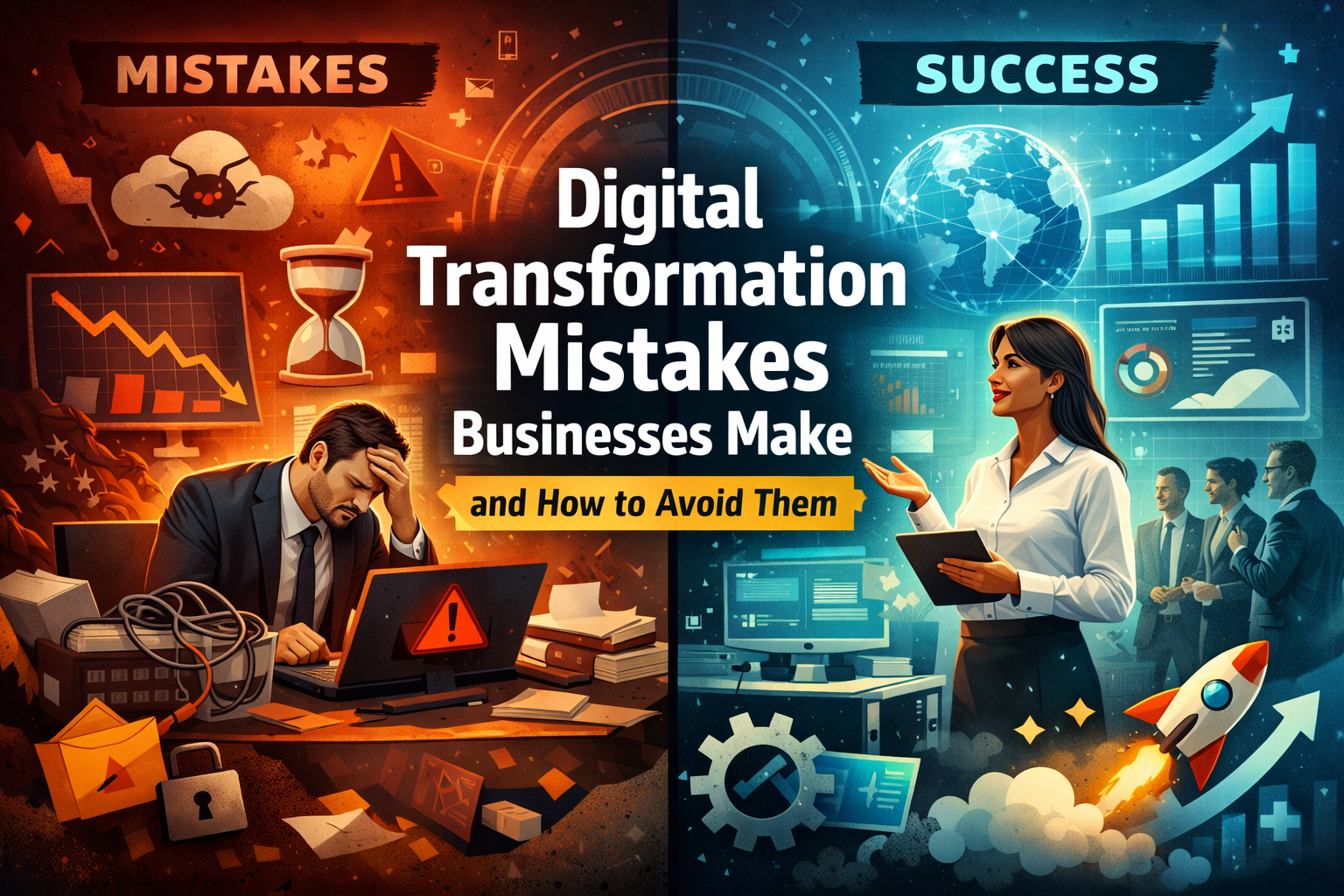
Digital Transformation Mistakes Businesses Make and How to Avoid Them
26
Feb
Digital transformation sounds glamorous, doesn’t it? Sleek dashboards. Automated workflows. AI-powered insights. A brand that suddenly feels ten steps ahead of the competition.
But here’s the truth nobody tweets about: most digital transformation projects stumble. Some crawl. Some crash. And some quietly drain budgets without delivering meaningful change.
Why?
Because technology alone doesn’t transform businesses. People, processes, clarity, and courage do.
In this in-depth guide, we’re unpacking the most common Digital Transformation Mistakes Businesses Make (and How to Avoid Them) not just from a technical angle, but from a strategic, human, and leadership perspective.
If you’re planning a digital shift or knee-deep in one this might just save you from expensive regret.
Digital Transformation Isn’t a Software Upgrade It’s a Mindset Shift
Let’s get something straight.
Digital transformation isn’t about launching a shiny website. It’s not about installing CRM software or migrating to the cloud and calling it a day.
It’s about reimagining how your business delivers value in a digital-first world.
And that’s where many organizations trip. They chase tools instead of transformation. They automate chaos instead of fixing it. They digitize broken systems and expect miracles.
Sound familiar?
Don’t worry you’re not alone. Let’s explore the most common pitfalls and how to sidestep them with clarity and confidence.
Before we dive into the common mistakes, ask yourself: does your business really need a digital transformation?
If you’re unsure, check out our guide on 7 Signs Your Business Needs Digital Transformation. It walks you through the key indicators so you know you’re tackling the right challenges before focusing on what to avoid.
Think of it as the foundation you start there, and this guide builds the advanced strategy on top.
1. Treating Digital Transformation as a One-Time Project
The Illusion of “We’re Done”
A new website launches. Applause.
An ERP system goes live. Celebration.
The team posts a LinkedIn update. Done, right?
Not quite.
Digital transformation isn’t a finish line. It’s a moving target.
Technology evolves. Customer expectations shift. Competitors adapt. What worked yesterday may feel outdated tomorrow.
Why This Backfires
When companies treat transformation as a one-off initiative:
-
Innovation stalls
-
Systems become obsolete quickly
-
Teams stop iterating
-
Momentum fades
And suddenly, the business is back where it started—just with newer tools.
How to Avoid It
-
Build a long-term digital roadmap
-
Schedule quarterly digital performance reviews
-
Embrace agile methodologies
-
Create a culture of experimentation
Transformation should feel like a journey not a checklist.
2. Lack of Clear Vision and Strategy
Technology Without Direction Is Expensive Guesswork
Ever seen a company adopt five different tools that don’t talk to each other? It’s like buying a sports car, a tractor, and a boat—without knowing whether you’re driving, farming, or sailing.
Without a clear strategy, digital initiatives become scattered experiments.
Warning Signs You’re Off Track
-
No defined KPIs
-
Confused employees
-
Budget overruns
-
Leadership disagreements
-
Tools solving problems nobody identified
How to Avoid This Classic Trap
Start with questions:
-
What business problem are we solving?
-
How will success be measured?
-
How does this align with long-term goals?
Then:
-
Document a unified digital strategy
-
Align all departments
-
Define measurable outcomes
-
Communicate vision consistently
Clarity reduces chaos. Always.
3. Ignoring Company Culture and Change Management
The Human Side of Digital Transformation Mistakes Businesses Make (and How to Avoid Them)
Here’s the uncomfortable truth: people resist change.
Not because they’re lazy. Not because they hate innovation. But because uncertainty feels risky.
When employees aren’t included in the transformation process, resistance grows quietly—and powerfully.
What Happens Next?
-
Low adoption rates
-
Frustration
-
Shadow systems
-
Passive sabotage
-
“We’ve always done it this way” attitudes
And just like that, expensive tools gather digital dust.
How to Avoid Cultural Resistance
-
Communicate the “why” behind changes
-
Provide training and upskilling
-
Celebrate small wins
-
Appoint internal digital champions
-
Encourage feedback
Transformation succeeds when people feel empowered not replaced.
4. Focusing on Technology Instead of Customer Experience
The Common but Dangerous Mistake
Businesses often obsess over backend systems while forgetting the most important stakeholder: the customer.
If the user experience becomes complicated, slow, or frustrating, guess what? Customers leave.
And they don’t send goodbye letters.
The Real Cost
-
Reduced conversion rates
-
Poor customer retention
-
Damaged brand perception
-
Increased support complaints
Technology should simplify the customer journey—not complicate it.
How to Stay Customer-Centric
-
Map the entire customer journey
-
Gather real user feedback
-
Conduct usability testing
-
Prioritize intuitive design
-
Simplify processes wherever possible
When in doubt, ask: does this make life easier for the customer?
If the answer’s no, rethink it.
5. Underestimating the Power of Data
Data isn’t just numbers. It’s insight. It’s direction. It’s competitive advantage.
Yet many companies collect mountains of data—and use almost none of it.
Common Data-Related Mistakes
-
Data silos
-
No analytics strategy
-
Poor data quality
-
Decisions based on gut feeling
Flying blind in a digital world? Risky business.
How to Get Data Right
-
Integrate systems for unified reporting
-
Define key performance indicators
-
Train teams to interpret analytics
-
Implement real-time dashboards
-
Establish clear data governance policies
When data informs decisions, growth becomes predictable not accidental.
6. Weak Cybersecurity Planning
Ignoring Security in Digital Transformation Mistakes Businesses Make (and How to Avoid Them)
Here’s something nobody likes to think about until it’s too late.
Cybersecurity.
Every new system, integration, or cloud migration expands your digital footprint. And with it? Potential vulnerabilities.
What’s at Stake?
-
Customer trust
-
Legal consequences
-
Financial loss
-
Brand reputation
A single breach can undo years of hard-earned credibility.
How to Build Security Into Your Strategy
-
Conduct regular security audits
-
Implement multi-factor authentication
-
Train employees on phishing awareness
-
Encrypt sensitive data
-
Partner with cybersecurity experts
Security shouldn’t be an afterthought. It should be foundational.
7. Trying to Do Everything at Once
The Overload Syndrome
Ambition is great. Overextension? Not so much.
When companies attempt to overhaul every system simultaneously, chaos follows.
Teams burn out. Deadlines slip. Focus disappears.
The Ripple Effects
-
Poor implementation quality
-
Resource strain
-
Strategic confusion
-
Reduced morale
Transformation should be structured—not frantic.
A Smarter Approach
-
Prioritize high-impact initiatives
-
Break projects into phases
-
Run pilot programs
-
Measure progress before scaling
Slow and steady often wins the digital race.
8. Not Partnering With the Right Experts
Digital transformation requires specialized skills. Expecting your internal team to master everything overnight? Unrealistic.
The DIY Danger
-
Inexperienced decision-making
-
Costly mistakes
-
Delays
-
Misaligned technology choices
How to Choose the Right Partner
-
Conduct thorough due diligence
-
Review past case studies
-
Ensure cultural alignment
-
Define clear deliverables
-
Maintain open communication
The right partner accelerates progress. The wrong one multiplies frustration.
9. Failing to Measure ROI Properly
Spending Without Tracking
Transformation investments can be significant. Without measuring return on investment, how do you know what’s working?
You don’t.
Common Measurement Mistakes
-
No baseline metrics
-
Vague performance indicators
-
Ignoring long-term value
-
Emotional decision-making
How to Fix It
-
Define ROI metrics before implementation
-
Monitor performance dashboards
-
Conduct periodic reviews
-
Adjust strategy based on results
What gets measured gets improved.
10. Neglecting Scalability and Future Growth
Short-Term Thinking = Long-Term Problems
Choosing cheap or limited tools might save money today—but cost significantly more tomorrow.
Re-platforming is expensive. Migration is disruptive. Downtime hurts.
Plan for Growth From Day One
-
Invest in scalable cloud solutions
-
Choose flexible, API-friendly platforms
-
Anticipate integration needs
-
Consider total cost of ownership
Think five years ahead, not five months.
A Practical 30-60-90 Day Digital Reset Plan
If your transformation feels messy, here’s a simple reset framework:
First 30 Days
-
Audit current systems
-
Identify major gaps
-
Gather employee feedback
-
Define top three priorities
Next 60 Days
-
Align strategy with leadership
-
Implement quick wins
-
Establish KPIs
-
Improve communication
Final 90 Days
-
Launch phased improvements
-
Measure impact
-
Optimize based on data
-
Strengthen cybersecurity
Momentum builds confidence. Confidence fuels transformation.
FAQs About Digital Transformation Mistakes Businesses Make (and How to Avoid Them)
What is digital transformation?
Digital transformation is the integration of digital technologies into all areas of a business to improve operations, enhance customer experience, and create new value.
Why do digital transformation projects fail?
They fail due to unclear strategy, cultural resistance, poor planning, lack of leadership alignment, weak cybersecurity, and failure to measure ROI.
How long does digital transformation take?
It varies depending on scope and complexity. Some initiatives take months; others evolve over several years.
Is digital transformation only for large enterprises?
Not at all. Small and medium-sized businesses can benefit significantly—often with faster implementation and greater agility.
How can I tell if my digital transformation is working?
Track measurable KPIs such as operational efficiency, customer satisfaction, revenue growth, and system adoption rates.
Conclusion: Transformation Is a Commitment, Not a Campaign
Digital transformation isn’t about chasing trends. It’s about building resilience, adaptability, and relevance in an ever-changing market.
The biggest Digital Transformation Mistakes Businesses Make (and How to Avoid Them) usually stem from rushing, guessing, or ignoring the human element.
But when approached strategically
With clarity.
With patience.
With courage.
Transformation becomes more than technology.
It becomes evolution.
And businesses that evolve? They don’t just survive.
They lead.